One Pan, Sausage, and Whatever Vegetables You Have
A flexible sheet-pan dinner that works with the vegetables lingering in your crisper drawer. Here is the method, the ingredient list and how to adjust it.
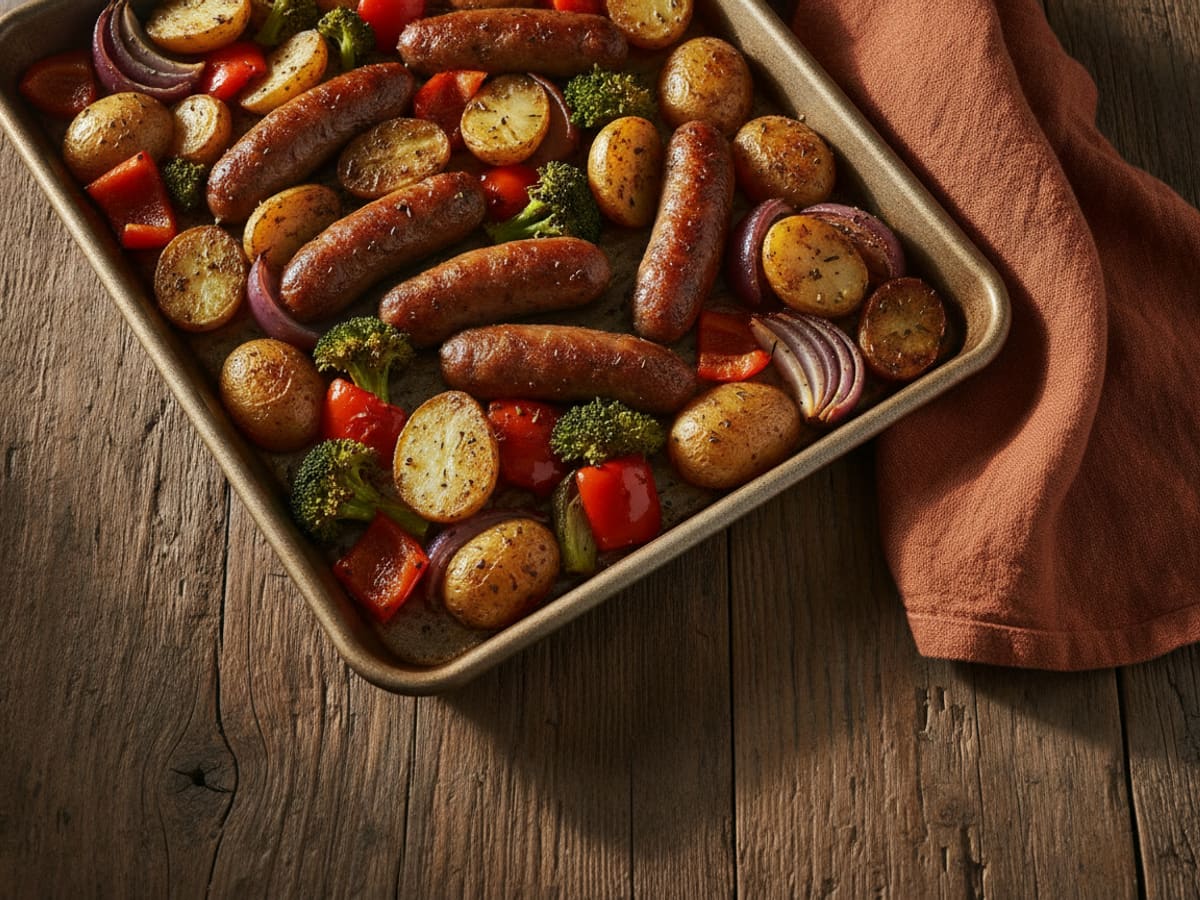
Some nights you want dinner to take care of itself. A sheet pan, a package of sausage, and the vegetables in your crisper drawer can do that. There's one pan to wash, not much chopping, and the oven does most of the work.
What goes on the pan
You need three things: sausage, vegetables, and a little fat to help everything brown.
For sausage, use whatever you like. Fresh pork, chicken, or turkey sausage works, as do pre-cooked smoked links. Fresh sausage needs longer in the oven. Pre-cooked sausage only needs to heat through and pick up some color.
For vegetables, choose a mix of sturdy ones and quicker-cooking ones. Potatoes, carrots, onions, and winter squash are sturdy. Broccoli, zucchini, bell peppers, and green beans cook faster.
Toss the vegetables with a few spoonfuls of oil, a good pinch of salt, and some pepper. Dried herbs, garlic powder, or smoked paprika are nice if you have them. Use a rimmed pan, since it keeps juices from dripping into the oven.
Cutting vegetables so they finish together
The trick to one-pan cooking is size. Dense vegetables take longer, so cut them smaller. Tender vegetables can stay in bigger pieces.
- Potatoes and carrots: bite-size chunks or half-inch slices.
- Onions: wedges, with the root end left on so the layers hold together.
- Bell peppers and zucchini: larger pieces, about the size of a walnut.
- Broccoli and cauliflower: medium florets, with the flat cut sides down when you roast.
If you'd rather not fuss with sizes, give the sturdy vegetables a head start. Put them in the oven alone for a while, then add the quicker ones and the sausage.
Oven setup and timing by sight
Heat the oven to 425°F, which is hot enough to brown without scorching. Put the rack in the middle of the oven.
- Spread the sturdy vegetables on the pan in a single layer and roast them while you cut the rest.
- Add the sausage and the quicker-cooking vegetables. Give everything a quick stir so the pieces are coated in oil.
- Roast, turning the sausage and stirring the vegetables about halfway through.
- Check by sight. The vegetables should have browned edges and give easily when poked with a fork. The sausage should be nicely colored and cooked through.
Ovens vary, so go by how things look more than by the clock. If the vegetables are done before the sausage, push them to one side or take them off the pan. If the sausage looks done but the potatoes are still firm, pull the sausage out and let the potatoes keep going.
For food safety, fresh pork sausage should reach 160°F inside, and chicken or turkey sausage should reach 165°F. A small instant-read thermometer takes the guesswork out. Pre-cooked sausage just needs to be hot all the way through.
Easy swaps for what's in your fridge
This meal works because it's flexible. Use the list below as a loose guide.
- No potatoes? Try sweet potatoes, parsnips, or a can of drained, dried-off chickpeas.
- Sad-looking cabbage? Cut it into wedges and roast it until the edges crisp.
- A few leftover mushrooms? Add them in the second half so they brown without shriveling away.
- Half a bag of frozen vegetables? Add them near the end and expect softer results, since they hold more water.
- Different protein? Cut-up chicken thighs need more time than sausage, so start them first. Cooked beans or a block of firm tofu also work.
- Wilting greens? Stir them in for the last few minutes, or toss them in after the pan comes out.
A quick sauce from pantry staples
A spoonful of sauce makes a simple pan feel finished. Stir one of these together while the oven does its work.
- Mustard dressing: whole-grain or Dijon mustard, a splash of vinegar, a little oil, and a small drizzle of honey if you like it sweet.
- Yogurt sauce: plain yogurt, lemon juice, a pinch of salt, and a grated or minced garlic clove.
- Tomato-garlic drizzle: tomato paste thinned with warm water, a splash of vinegar, and dried oregano.
Taste and adjust. If it's sharp, add a bit more oil or sweetener. If it's flat, add salt or acid.
Storing and reheating leftovers
Let leftovers cool briefly, then get them into the refrigerator within two hours of cooking. Shallow containers cool faster than deep ones. Eat them within three to four days.
Reheat in a skillet or back in the oven for the best texture. Microwaving works, but the vegetables will be softer. Make sure the food is steaming hot all the way through before you eat it.
Leftovers also make good second meals. Chop everything and stir it into scrambled eggs, tuck it into a tortilla, or toss it with cooked pasta and a splash of the pan juices.